 Gebärdensprache
 Leichte Sprache

Nominee 2026
Dunkelflaute und Hellbrise
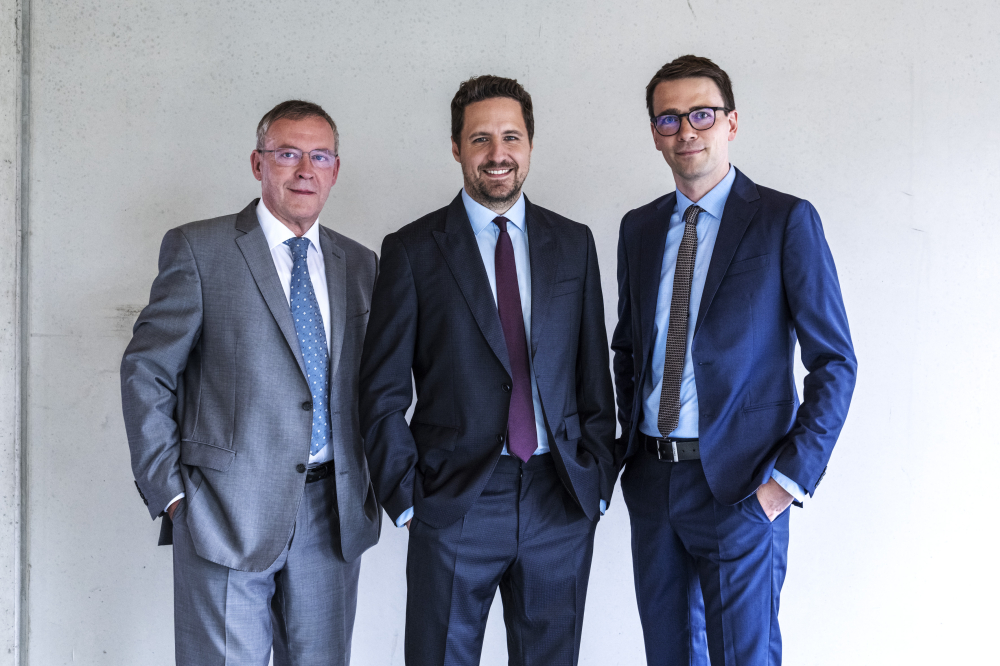
(f.l.t.r.) Prof. Dr. Hartmut Spliethoff, Dr.-Ing. Stephan Herrmann, Felix Fischer
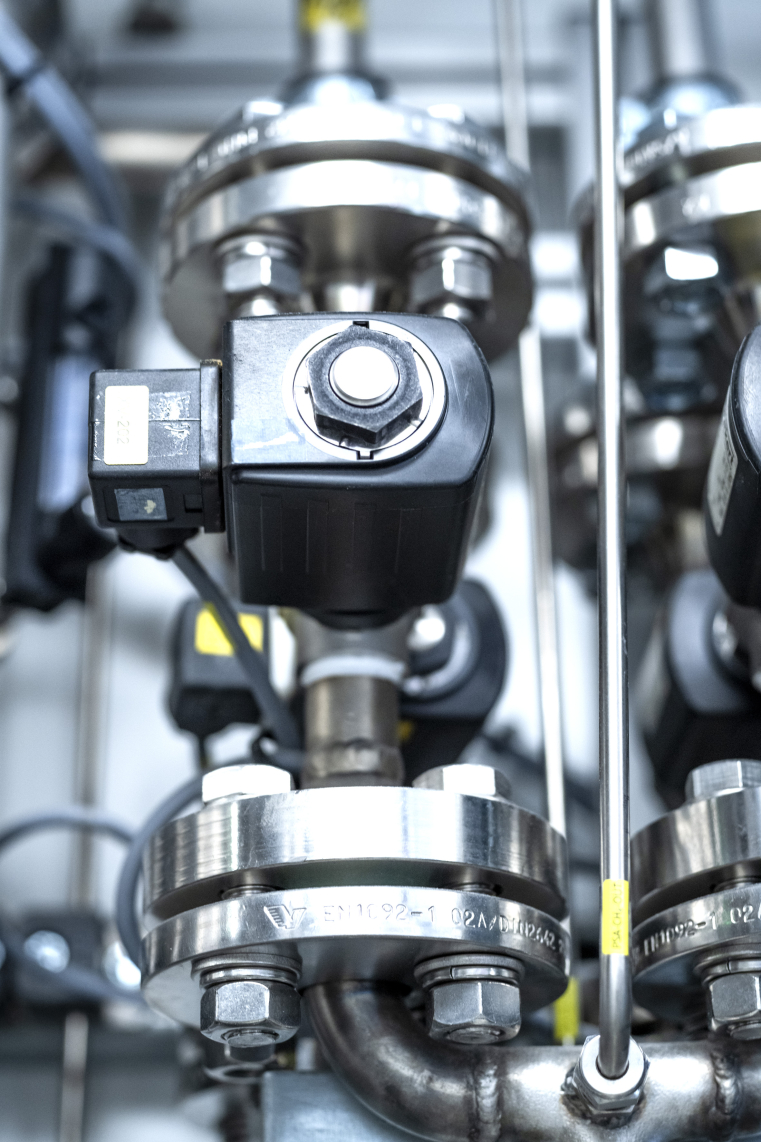
Gas—in the form of biogas, natural gas, or even hydrogen—already possesses the necessary storage capacity. Biogas, for example, is produced from organic waste materials such as manure or plant material and—when processed into biomethane as a natural gas substitute — can be stored in the gas grid for months and used to generate electricity as needed.
Until now, however, this principle has only worked in one direction: gas was converted into electricity. This is where the invention by nominees Stephan Herrmann, Felix Fischer, and Hartmut Spliethoff comes in. The team developed a reversible fuel cell power plant that combines both processes in a single facility. When electricity is needed, it generates electrical energy from biogas, natural gas, or hydrogen. If, on the other hand, surplus wind or solar power is available, the same facility operates in reverse, converting electrical energy into hydrogen or synthetic methane. Both energy carriers can be stored long-term in the existing gas grid and reused later. The switch between the two operating modes occurs automatically and within a few minutes. A conventional biogas plant is thus transformed into a flexibly controllable power plant with virtually unlimited storage capacity.
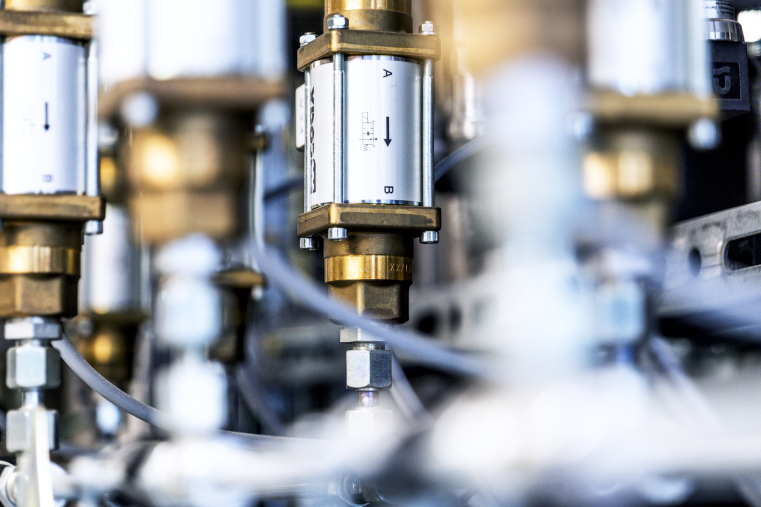
The system realizes its full potential by utilizing the existing gas infrastructure. The German natural gas grid alone has storage capacities of around 300 terawatt-hours. This is roughly three times the monthly gas consumption in Germany. While new power lines and grid connection points often take years to plan and build, this means that a massive seasonal energy storage facility is already available today.

Weitere Details
Lebensläufe
Dr.-Ing. Stephan Herrmann
22.07.1985
Geboren in Heilbronn
2006 – 2009
Julius-Maximilians-Universität Würzburg
Physik-Nanostrukturtechnik (B.Sc.)2009 – 2010
Heriot-Watt-University Edinburgh
Optoelectronics & Lasers (M.Phys.)2010 – 2011
Julius-Maximilians-Universität Würzburg
Physik-Nanostrukturtechnik (M.Sc.)2012 – 2017
Wissenschaftlicher Mitarbeiter (Lehrstuhl für Energiesysteme)
Technische Universität München2012 – 2018
Technische Universität München
Maschinenwesen (Dr.-Ing.)2018 – 2019
Fachgruppenleiter (Lehrstuhl für Energiesysteme)
2019 – 2022
Abteilungsleiter (Lehrstuhl für Energiesysteme)
Seit 2022
Reverion GmbH, Eresing
CEO und Geschäftsführer
Patente
2020 – heute
8 Patentanmeldungen
Publikationen
Experimental Investigation of Naphthalene Induced Degradation of Reversible Solid Oxide Cells Operated on Bio-Syngas
Analysis on Temperature Uniformity in Methane-Rich Internal Reforming Solid Oxide Fuel Cells (SOFCs)
Experimental Investigation of Naphthalene Induced Degradation of Reversible Solid Oxide Cells Operated on Bio-Syngas
Felix Fischer
23.02.1988
Geboren in Hamburg
2006 – 2008
Staatliche Gewerbeschule Chemie, Hamburg
Chemisch-Technischer Assistent (CTA)2008 – 2012
Technische Universität München
Energie- und Prozesstechnik (B.Sc.)2012 – 2014
Technische Universität München
Energie- und Prozesstechnik (M.Sc.)2014 – 2022
Technische Universität München (TUM), München
Wissenschaftlicher Mitarbeiter (Lehrstuhl für Energiesysteme)2022 – heute
Reverion GmbH, Eresing
COO
Patente
2020 – heute
3 Patentanmeldungen
Publikationen
Applying Reaction Kinetics to Pseudohomogeneous Methanation Modeling in Fixed-Bed Reactors
Experimental Investigation of an Anode Supported SOFC Stack Under High Direct Internal Reforming Conditions
CFD-DEM Simulation der Biomasse-Vergasung in der Wirbelschicht: Detaillierte Modell-Analyse und Reaktor-Optimierung
Coarse-grained CFD-DEM simulation of biomass gasification in a fluidized bed reactor
Reverse Current Treatment of Short Stacks – Experimental Results and System Considerations
Modeling of a Reversible SOC in Ansys Fluent
Detailed CFD-DEM Simulation of Biomass Gasification in a Fluidized Bed Reactor
Effect of internal hydrocarbon reforming during coupled operation of a biomass gasifier with hot gas cleaning and SOFC stacks
Utilization of Bio-Syngas in Solid Oxide Fuel Cell Stacks: Effect of Hydrocarbon Reforming
CO2-Einbindung in dezentralen Biomassevergasungsanlagen
Prof. Dr.-Ing. Hartmut Spliethoff
12.08.1960
Geboren in Quierschied
1979 – 1981
Universität Kaiserslautern, Maschinenbau
1982 – 1986
Universität Stuttgart, Maschinenbau
1986
Diplomabschluss Universität Stuttgart
1991
Promotionsabschluss Universität Stuttgart
1991 – 1999
Universität Stuttgart
Leiter der Abteilung Dampferzeugertechnik
Institut für Prozessingenieurwesen und Kraftwerktechnologie2000 – 2004
Technische Universität Delft, Niederlande
Leiter des Lehrstuhls „Energievoorziening/Energy Technology“Seit 2004
Technische Universität München
Lehrstuhlinhaber „Energiesysteme“
Leiter der Abteilung Energiespeicherung des ZAE Bayern e.V.
Vorstandsvorsitzender des ZAE Bayern e.V. 11/16-11/20
Mitgliedschaften und Auszeichnungen (Auszug)
Mitglied des VGB Wissenschaftsbeirats
Mitglied des Combustion Institute, Deutsche Sektion, Göttingen
Leitung des ZAE Bayern e.V. (Zentrum für angewandte Energieforschung) 11/16-11/20
Wissenschaftlicher Leiter der Abteilung „Technologie für Energiesysteme und Erneuerbare Energie“ des ZAE Bayern
Patente
21 Patente
ORCID: 0000-0003-3743-2731
h-index: 73 (Google scholar)
Publikationen (Auszug)
Entrained flow gasification-based biomass-to-X processes: An energetic and technical evaluation
Investigation on cell-to-cell variations within methane-rich internal reforming solid oxide fuel cell (SOFC) stacks
Evaluation of influential factors on energy system optimisation
Requirements on synthesis gas from gasification for material and energy utilization: a mini review
Entrained flow gasification-based biomass-to-X processes: A techno-economic assessment
Operation of Conventional Power Plants During the German Energy Transition: A Mini Review
Impact of Power-to-X on Energy Systems as a Key Technology to Defossilization
Kontakt
Koordination und Pressekontakt
Lisa Männel
Marketing & Communications Manager
Reverion
Am Mittelfeld 11
96922 Eresing
Tel.: +49 (0) 8193 / 36 39 21 35
E-Mail: press@reverion.com
Web: www.reverion.com
Sprecher
Dr.-Ing Stephan Herrmann
Geschäftsführer
Reverion
Am Mittelfeld 11
96922 Eresing
Tel.: +49 (0) 8193 / 36 39 20
E-Mail: stephan.herrmann@reverion.com
Web: www.reverion.com
Beschreibung der Institute und Unternehmen zu ihren nominierten Projekten
Dunkelflaute und Hellbrise – Das reversible Kraft werk schließt die letzten Lücken der Energiewende
Der Klimawandel ist das dringlichste Problem unserer Zeit. Eine emissionsarme, grüne Energieversorgung auf Basis erneuerbarer Energieträger ist deshalb unverzichtbar. Doch die Versorgung mit erneuerbaren Energien stellt uns vor eine zentrale Herausforderung: Die eingesetzten technischen Anlagen liefern Strom nicht immer dann, wenn er gebraucht wird, sondern dann, wenn Wind und Sonne verfügbar sind. Für ein klimaneutrales Energiesystem wird die Langzeitspeicherung erneuerbarer Energie deshalb zur Schlüsseltechnologie.
Reverion hat dafür ein reversibles Hochtemperatur-Brennstoffzellensystem entwickelt, das Stromerzeugung und Energiespeicherung in einer einzigen Anlage vereint. Im Kraftwerksbetrieb wandelt das System Biogas, Erdgas oder Wasserstoff mithilfe der Festoxid-Brennstoffzellentechnologie (SOFC) elektrochemisch in Strom um, ohne Verbrennungsprozess und damit deutlich effizienter und emissionsärmer als konventionelle motorbasierte Kraftwerke. Das dabei aus Biogas freigesetzte, biogene CO₂ wird abgeschieden. Bei Stromüberschuss arbeitet dieselbe Anlage im Elektrolysebetrieb und erzeugt aus erneuerbarem Strom grünen Wasserstoff oder, unter Verwendung des abgeschiedenen CO₂, synthetisches Methan. Beide Energieträger können in der bestehenden Gasinfrastruktur über Monate gespeichert und bei Bedarf wieder zur Stromerzeugung genutzt werden. Je nach Marktsituation kann das im Biogas enthaltene CO2 auch weiterverarbeitet oder dauerhaft abgeschieden und gespeichert werden, wodurch sich negative Emissionen erzielen lassen.
Mit dieser Technologie schließt Reverion eine der letzten großen technologischen Lücken der Energiewende. Erneuerbare Energie wird nicht nur erzeugt, sondern genau dann verfügbar gemacht, wenn sie benötigt wird. Gleichzeitig verbindet das System Strom- und Gasnetz, reduziert Netzengpässe und nutzt bestehende Infrastruktur für eine flexible und resiliente Energieversorgung.
Im Praxisbetrieb auf der Biomethananlage Mühlacker erreichte eine Vorserienanlage unter realen Betriebsbedingungen einen elektrischen Wirkungsgrad von 74,2 Prozent, ein neuer Weltrekord für thermische Kraftwerke. Zum Vergleich: Konventionelle Blockheizkraftwerke erreichen typischerweise rund 40 Prozent Wirkungsgrad. Reverion gewinnt damit aus derselben Menge Biogas nahezu doppelt so viel Strom. Mittelfristig strebt das Unternehmen einen elektrischen Wirkungsgrad von bis zu 80 Prozent an.
Die Technologie ist bereits im Markt. Sieben Reverion Anlagen sind inzwischen im Feldeinsatz, von der 100-Kilowatt-Anlage bis zum 500-Kilowatt-System, unter anderem auf Biogasanlagen in Baden-Württemberg und Bayern sowie im H2 Reallabor Burghausen gemeinsam mit Wacker Chemie und OMV. Alle Systeme werden vollständig im Werk montiert, getestet und im Containerformat ausgeliefert. Dadurch können sie innerhalb weniger Tage beim Kunden installiert und in Betrieb genommen werden.
2022 wurde Reverion als Ausgründung der Technischen Universität München gegründet. Seitdem ist das Unternehmen auf rund 220 Mitarbeitende gewachsen. Um der steigenden nationalen und internationalen Nachfrage gerecht zu werden, bereitet Reverion aktuell den Schritt in die industrielle Serienproduktion vor und sucht dafür einen weiteren Produktionsstandort in Deutschland, mit Perspektive auf bis zu 800 neue Arbeitsplätze. Der Hauptsitz in Eresing bleibt das Entwicklungs- und Innovationszentrum des Unternehmens.
Die Einsatzmöglichkeiten von Reverion Kraftwerken reichen weit über Biogasanlagen hinaus. Da die Anlagen ebenso mit Wasserstoff und Erdgas umgehen können, eignet sich die Technologie überall dort, wo erneuerbare Energie flexibel gespeichert und bedarfsgerecht bereitgestellt werden muss, von kommunalen Energiezentralen über Industrieanwendungen bis hin zu Rechenzentren.
Über Reverion
Die Reverion GmbH wurde 2022 als Ausgründung der Technischen Universität München gegründet und produziert reversible Hochtemperatur-Brennstoffzellensysteme. Die Technologie verbindet hocheffiziente Stromerzeugung mit der Produktion von grünem Wasserstoff und synthetischem Methan in einem einzigen System. Reverion beschäftigt heute rund 220 Mitarbeitende am Hauptsitz in Eresing im Landkreis Landsberg am Lech und treibt mit seinen Lösungen die Transformation zu einem klimaneutralen Energiesystem voran.