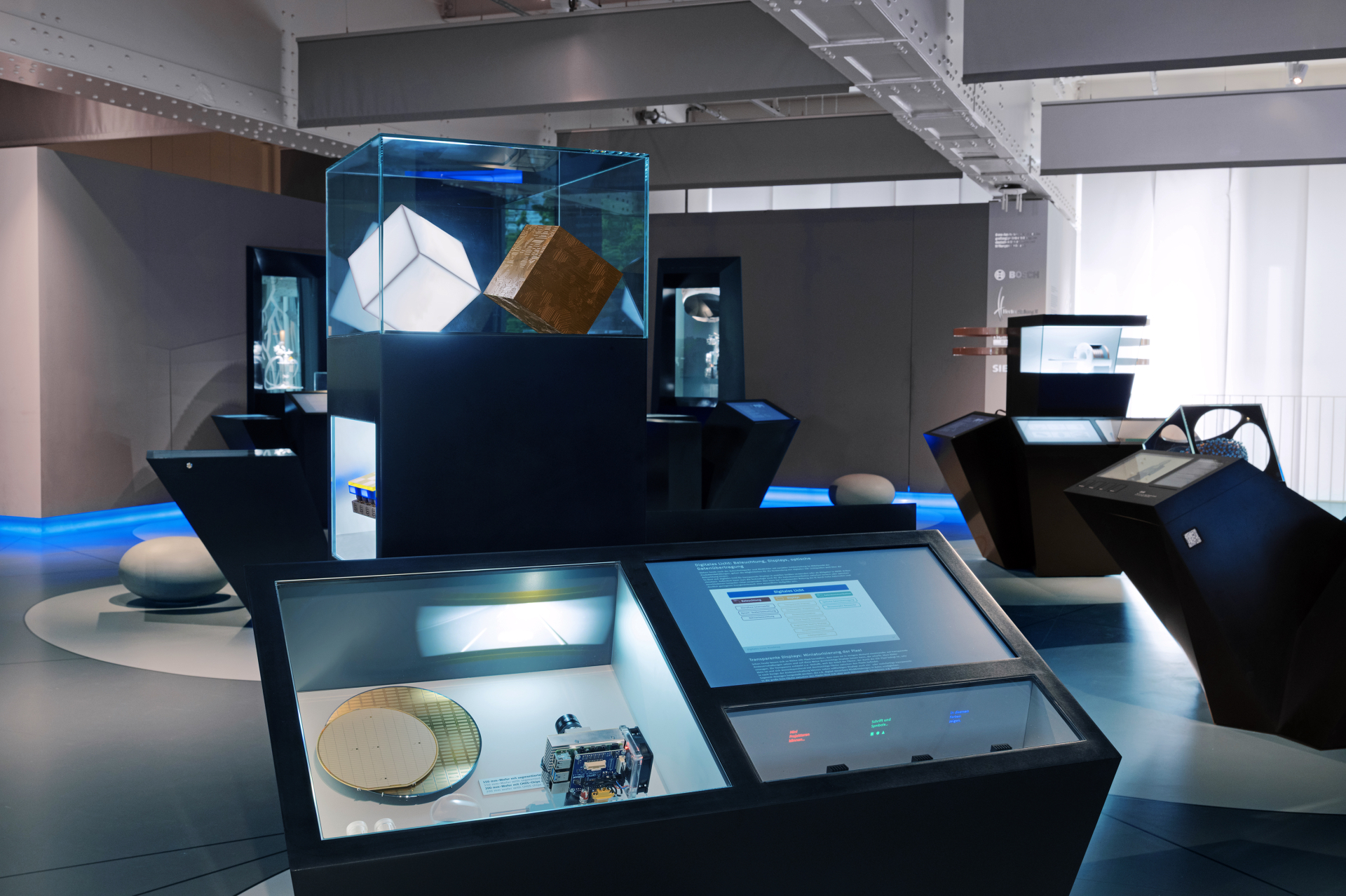
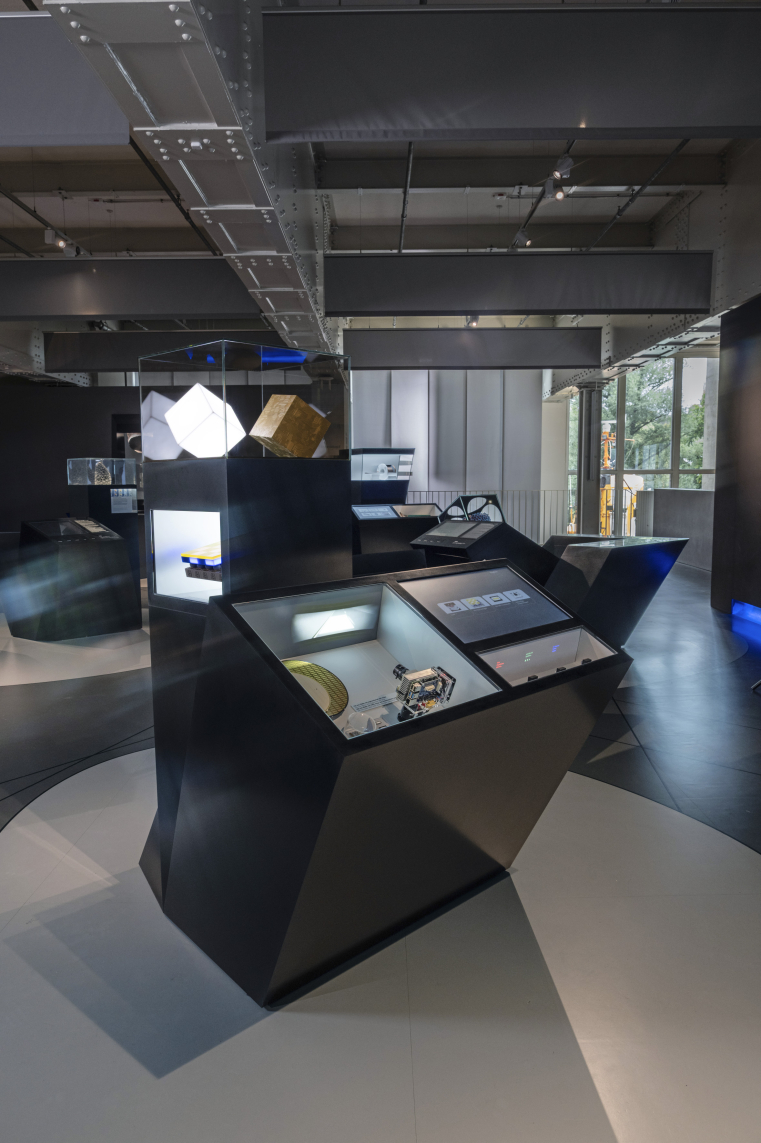
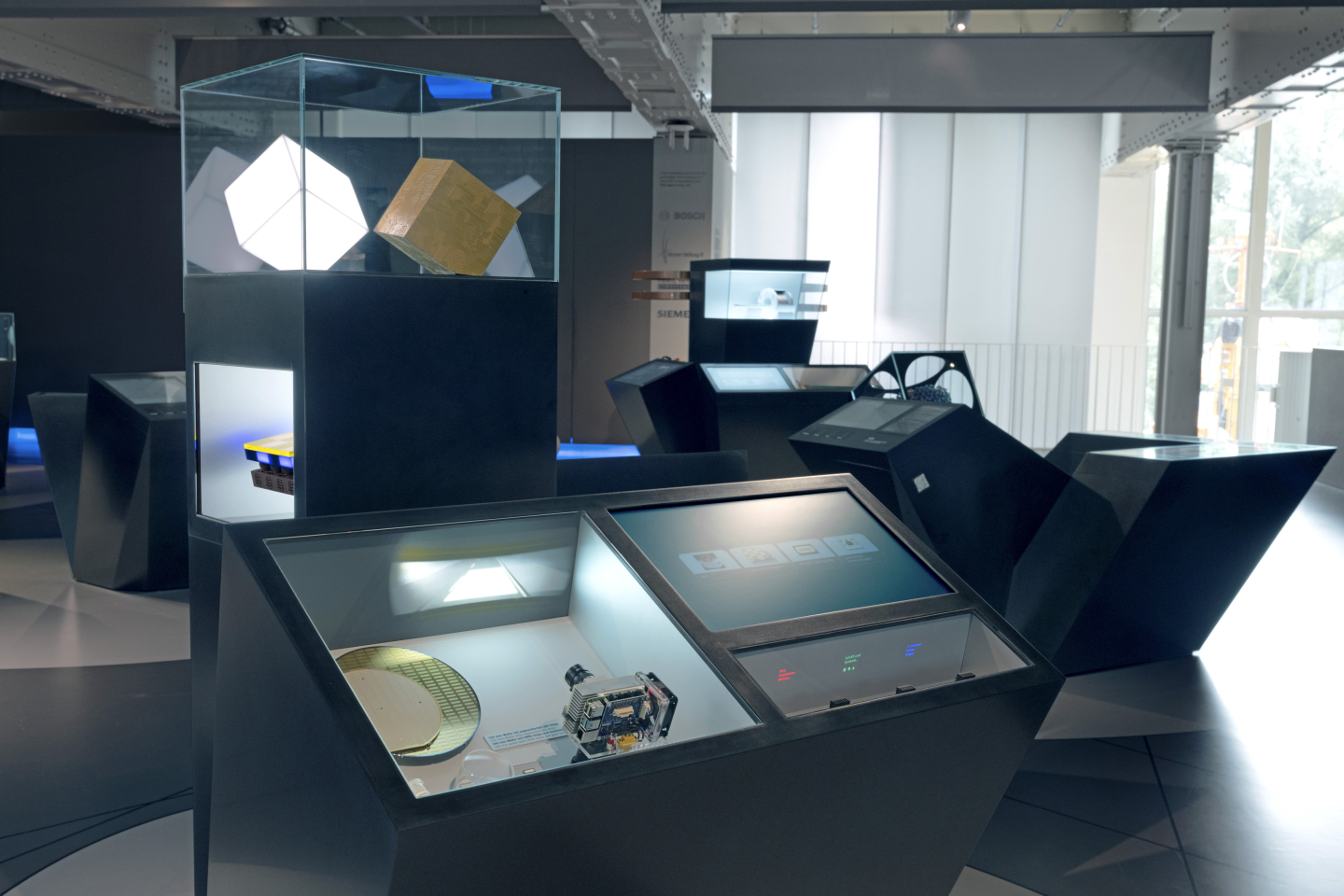
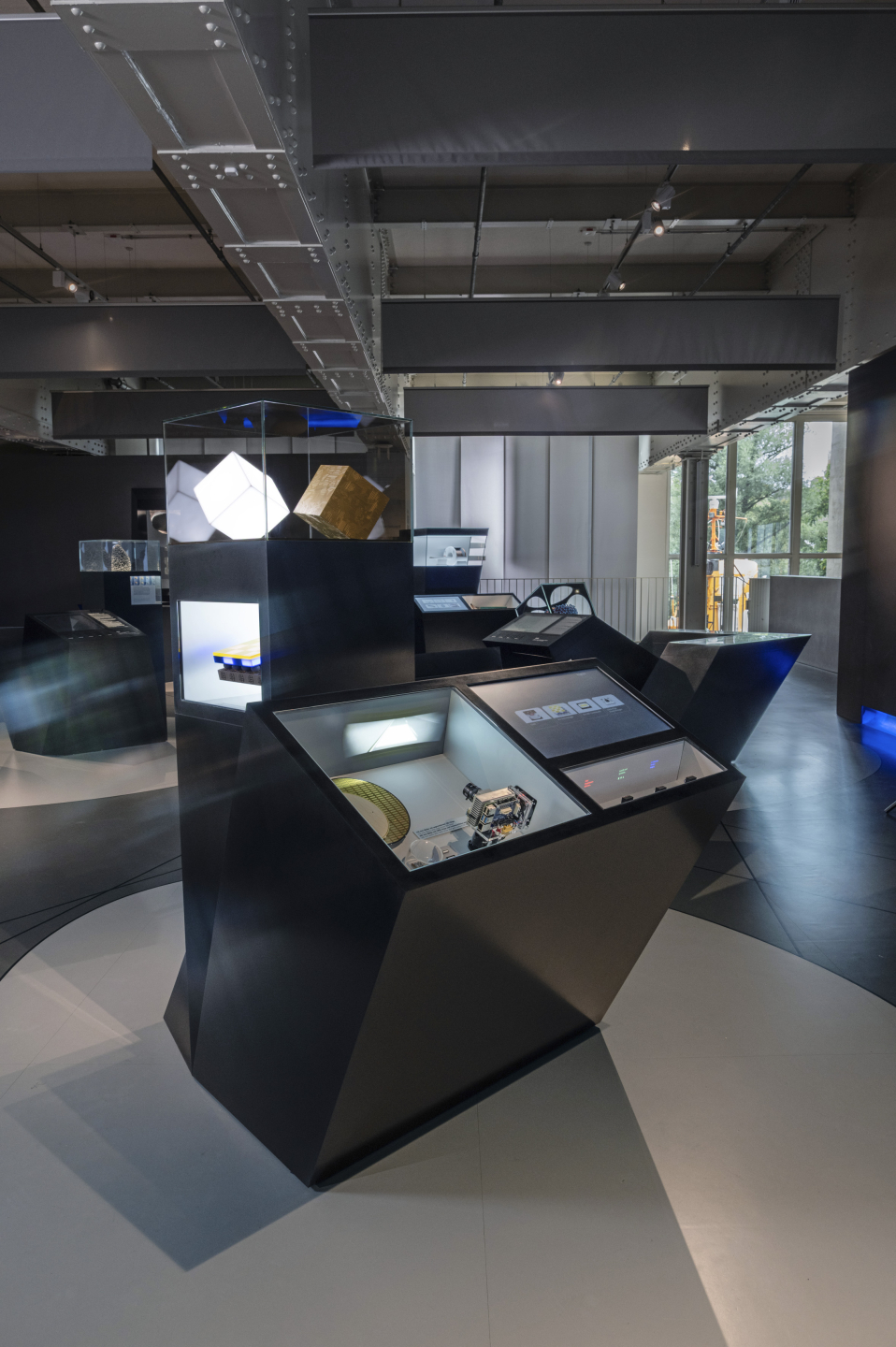
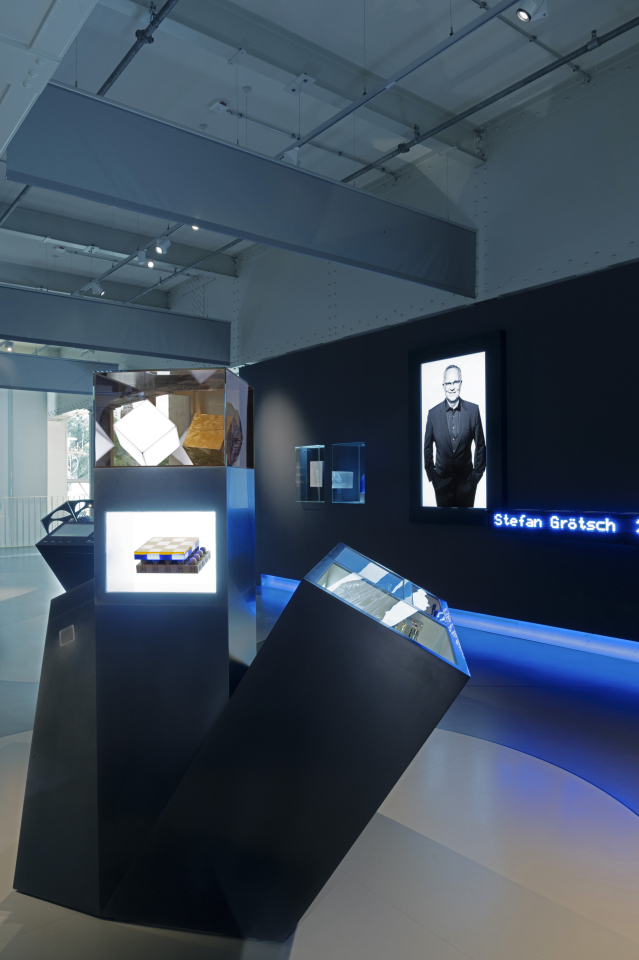
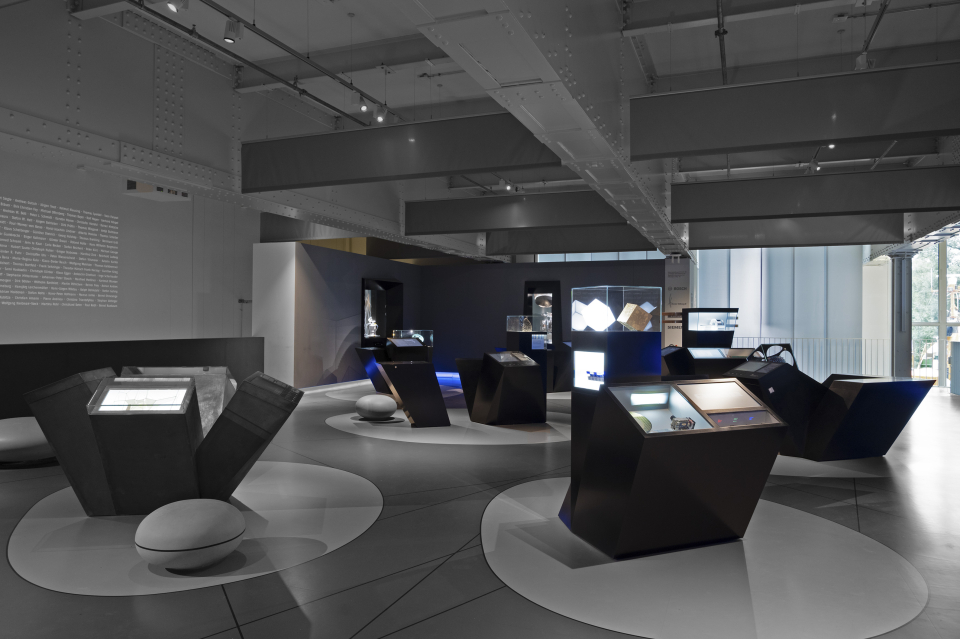
In the Deutscher Zukunftspreis exhibition, the module of the 2024 prizewinners has a prominent position and attracts attention with its “gateway,” an artistic or playful approach to the topic. Two cubes symbolize, as an abstract essence, the new and exciting connection between electronics and light created by the prizewinners’ work.
In this direct context, the first exhibit is the key feature of the innovation, presented as a model on a scale of 1000:1: a luminous LED/CMOS chip stack that illustrates the combination of the LED chip with its numerous pixels and the CMOS chip, which supplies power and control signals via the uniquely structured connection layer.
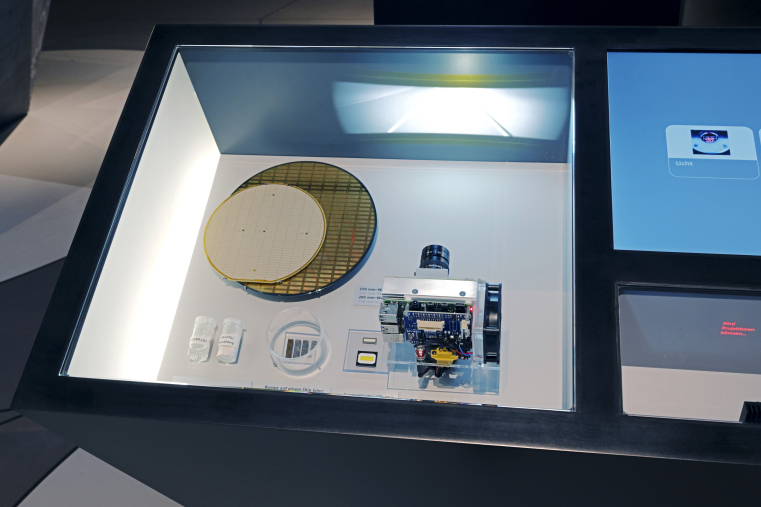
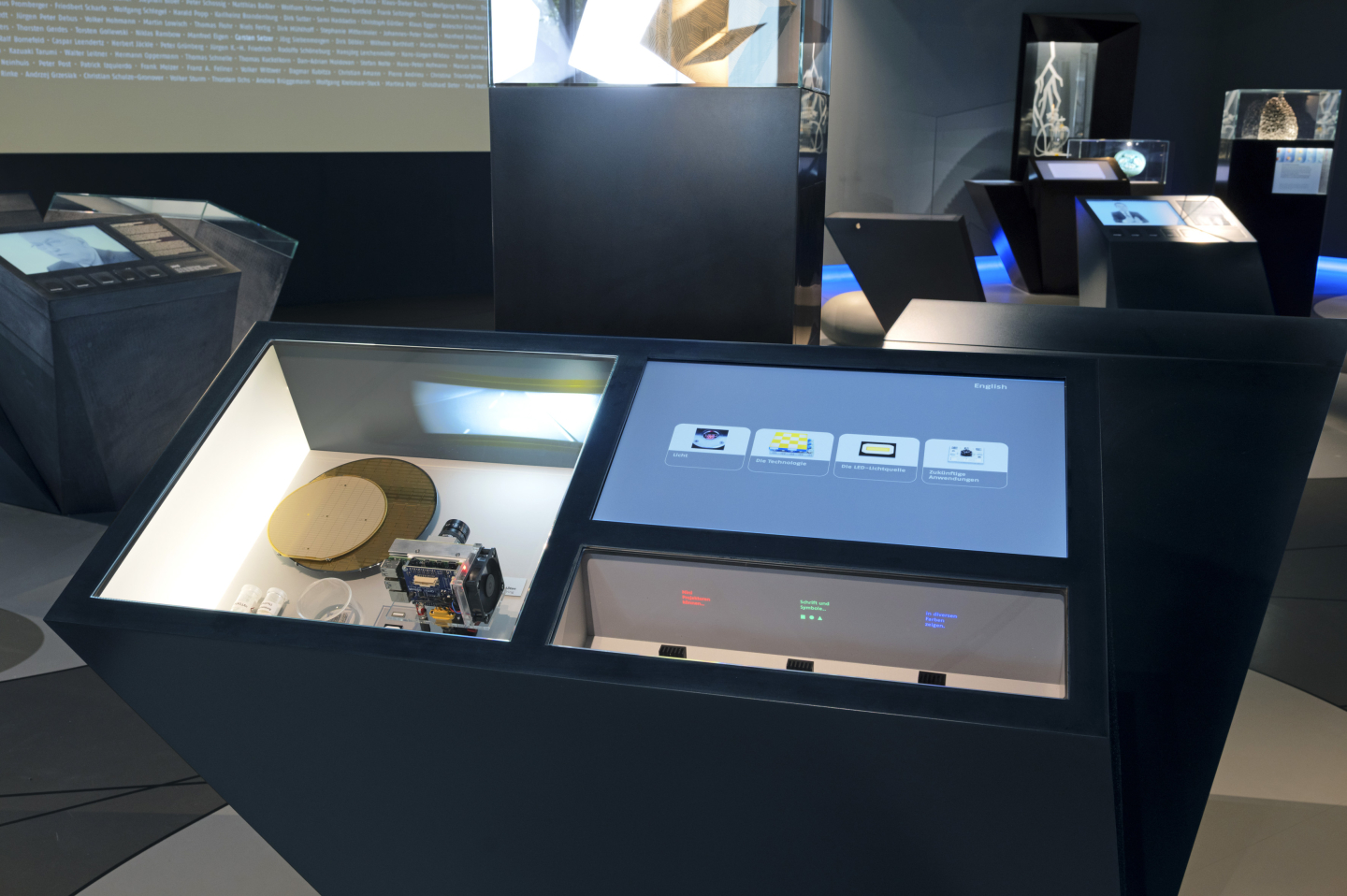
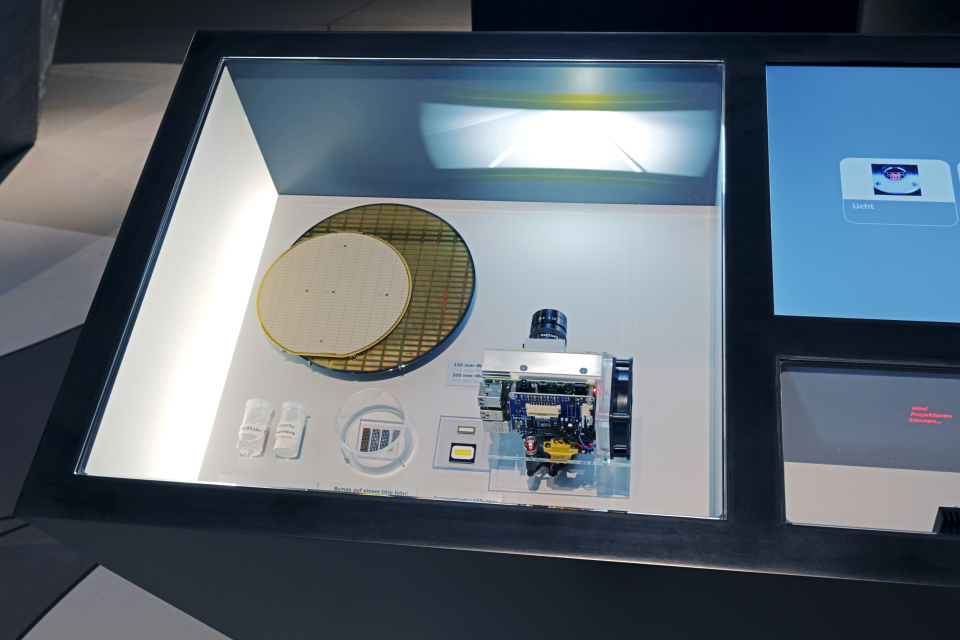
In another display case, the path from idea to project is illustrated with exhibits and various projections showing the unique features and achievements of current implementations of digital light. These include basic elements such as a wafer with segmented LED chips containing around 300 chips, each with 25,600 light-emitting pixels, and a CMOS wafer with a gold layer for later connection of the two components.
Below this – and just as necessary – are located the chemical starting materials for the “bumps,” the solder points used to connect the LED and CMOS chips. Then, enlarged 30 times and still only visible through a magnifying glass, the bump materials can be examined: gold, tin, and then a gold-tin solder. Next to this, the result of the combination can be seen: the segmented LED chip soldered onto a CMOS chip. Beneath this are the LED/CMOS chip stack and the new LED light source for car headlights.
A special exhibit, the first industrial implementation of digital light, a headlight projector with the LED light source can be seen to the right. An animation demonstrates the qualities of the newly designed product.
The prizewinners’ innovation includes other interesting, forward-looking applications, one of which can be experienced in the side display case: mini-projectors with miniaturized segmented LED light sources capable of displaying images in high resolution in the smallest of spaces.
More detailed information about the innovation and the exhibits can be accessed on an explanatory screen. An explanation is provided about the physical and philosophical principles of light and lighting as well as the technology of the new digital light and how it differs from existing and conventional light sources.
In the media terminal, an element assigned to each module in the exhibition, are statements from the prizewinners about their work, the development, and then the achievement of the common goal. It also includes an outline of the innovation’s economic impact. The ZDF German television production about the team’s successful innovation is also included and was part of the 2024 award ceremony.

 Gebärdensprache
 Leichte Sprache